
Reservas un vuelo a un país que apenas puedes ubicar en un mapa. Las fotos parecen mágicas, el precio era el adecuado y, ahora que el correo de confirmación está en tu bandeja de entrada, se te encoge el estómago. ¿Y si nadie habla inglés? ¿Y si te estafan, te pierdes o te enfermas? ¿Y si los titulares tenían razón y simplemente es demasiado peligroso? Viajar a lugares de los que no sabes nada siempre despertará nervios, pero no tiene por qué ser paralizante. Con la preparación, la mentalidad y los hábitos sobre el terreno adecuados, puedes dejar que la curiosidad te guíe y mantener el miedo en el asiento trasero en lugar de al volante.
Get the latest updates straight to your inbox!
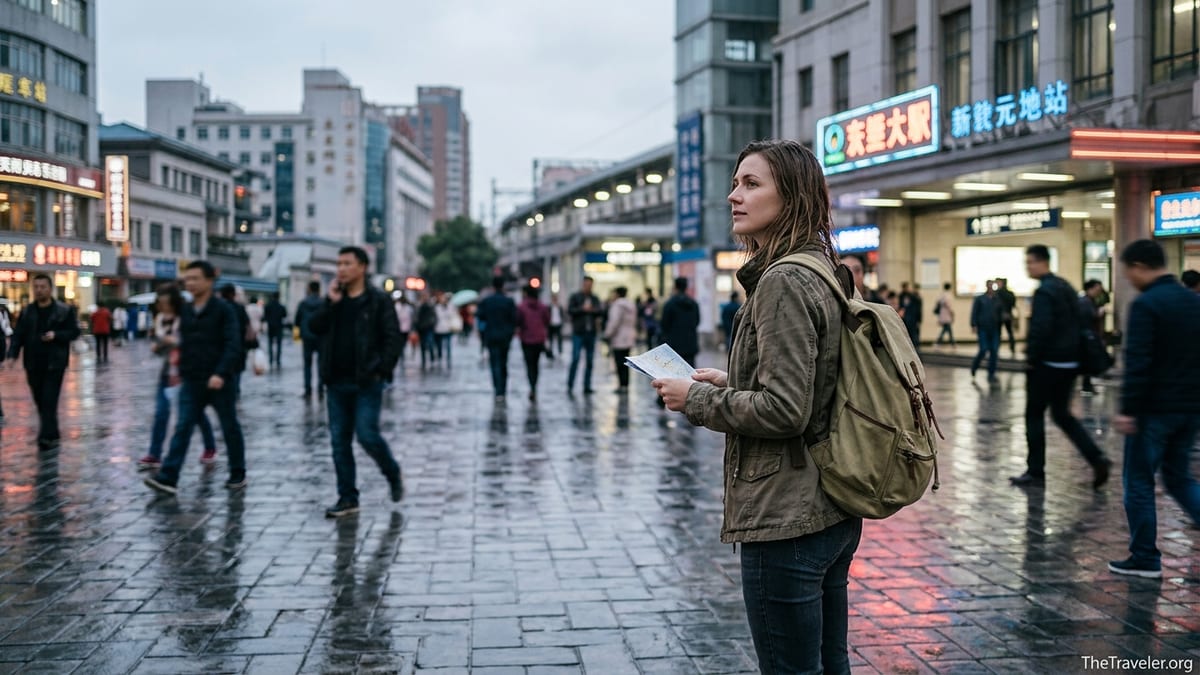
A practical guide to planning, mindset, on-the-ground strategies, and real tools that help you explore unfamiliar destinations without letting fear make your decisions.
Understanding What You Are Really Afraid Of
Fear thrives in vagueness. When you say “I’m scared to go somewhere I know nothing about,” you are usually not afraid of the place itself but of specific scenarios: getting lost in Tokyo’s train stations, not understanding prices in a Marrakech souk, or misreading social cues in a rural village in Laos. Start by naming the concrete fears. Are you mostly worried about physical safety, scams, illness, language, or simply feeling foolish and out of place? Once you identify the real concern, you can actually do something about it instead of battling a giant, shapeless anxiety cloud.
It also helps to recognize that our brains are wired to overestimate danger in unfamiliar environments. News coverage focuses on the most dramatic negative events, not the millions of uneventful, safe days locals experience. Studies on solo travel safety show a big gap between perceived and actual risk; for example, research on women traveling alone finds that many report feeling unsafe before departure yet encounter fewer serious incidents than they expected once on the road. That does not mean risk is zero, only that fear is not always an accurate guide to reality.
Try a simple exercise before you write off a destination. Take one of your worries and ask, “How likely is this, and what would I do if it happened at home?” If you are afraid of petty theft in Barcelona, compare it to how you already protect yourself in New York or Chicago: you avoid flashing expensive gear on the subway and keep valuables in a zipped pocket. Often you will realize you already know many of the skills you need; you are just applying them in a new setting.
Finally, separate your fear of the unknown from your actual risk tolerance. Some travelers are comfortable arriving in Mexico City with only the first night’s hostel booked; others sleep better with a printed itinerary and airport transfer arranged. Neither is more “authentic.” The goal of traveling to places you know nothing about is not to become fearless but to right-size your fear so it informs your decisions without dictating them.
Doing Just Enough Homework Without Killing the Mystery
When a destination feels completely opaque, a bit of targeted research can transform anxiety into anticipation. The trick is to do enough homework to avoid obvious pitfalls without overloading on horror stories and worst-case scenarios. Start with practical basics: visa rules, entry requirements, health recommendations, and any current travel advisories from your government. For instance, if you are a United States citizen traveling to Vietnam, you will want to check whether you qualify for a short visa exemption or need to apply online beforehand, and whether any recent policy changes affect your arrival airport.
Next, focus on “how daily life works” in that country. Look up how people typically pay for things (cash-heavy, card-friendly, or mobile payments), how public transport functions, and roughly what everyday items cost. Before going to Japan for the first time, many travelers discover that trains are extremely punctual, that Suica or Pasmo transit cards can be used in convenience stores, and that an inexpensive bowl of ramen in Tokyo can cost the equivalent of 6 to 10 US dollars. These specific details do more to calm nerves than vague assurances that “it will be fine.”
Balance risk information with positive, on-the-ground perspectives. Instead of diving into a comment thread full of worst-case scenarios, read first-hand trip reports from recent visitors. Many travel communities share up-to-date experiences for destinations like Georgia, Colombia, or Albania that have shed older reputations but still sound intimidating to first-timers. Notice how often travelers say things like “I was nervous before I went to Medellín, but the reality felt much safer and friendlier than I expected.” Again, this is not a guarantee, just a useful counterweight to fear.
Finally, understand that you cannot research away all uncertainty. You will never fully know what it is like to land at 11 p.m. in a monsoon in Bangkok or to navigate a chaotic bus station in Nairobi until you are there. Aim for a simple information checklist: you know how to leave the airport, where you will sleep the first night, how to access money, how to contact help in an emergency, and a few basic phrases in the local language. Beyond that, leave mental space for improvisation. Overplanning can become another way of letting fear run the show.
Building a Safety Net Before You Land
One of the most effective ways to keep fear from taking over is to build safety nets into your trip before you ever set foot on the plane. These are not just for worst-case emergencies; they are also for the smaller panicky moments that can derail an otherwise good journey. Start with finances and communication. Tell your bank you will be traveling so your card is less likely to be blocked. Travel with at least two payment methods, such as a debit card and a low-fee credit card, and keep a small emergency cash stash in a separate spot in your luggage. For many destinations, 100 to 200 US dollars in local currency or widely accepted foreign cash is enough to get you through a night in a guesthouse, a couple of meals, and a taxi if your card fails.
Next, set up your digital safety net. Download offline maps for your destination and mark key places ahead of time: your accommodation, a major hospital, a 24-hour pharmacy, the central train or bus station, and maybe a well-known hotel or landmark near your lodging that taxi drivers will recognize. In a city like Istanbul, saving your guesthouse location near Taksim Square and the nearest tram stop on an offline map can make late-night arrivals much less stressful. Consider also saving a screenshot of your accommodation’s name and address in the local language to show drivers.
Travel insurance is another piece of the safety puzzle. While you do not need the most expensive, all-inclusive plan, basic coverage that includes medical care, emergency evacuation, and coverage for lost luggage can make a daunting destination feel more manageable. If you are heading somewhere remote, such as a trekking trip in Nepal or a road trip in rural Patagonia, pay attention to how your policy defines “adventure activities” and what is included or excluded. Knowing ahead of time that an emergency helicopter rescue in the Himalayas or a hospital visit in Chile’s Lake District would be covered can take a surprising amount of background anxiety off your shoulders.
Finally, decide on one or two check-in routines that will reassure both you and the people who care about you. Many travelers share their live location through a secure messaging app with a trusted friend back home, or send a quick “arrived and safe” update after each long transfer. You might also email your itinerary and scanned passport to yourself so you can access it from any device. These habits are not about broadcasting your movements to the world; they are about making sure that if something goes wrong, you are not starting from zero support.
Using Local Knowledge to Shrink the Unknown
Nothing dissolves the fear of the unknown faster than borrowing the eyes of someone who already knows a place intimately. Local knowledge can come from a range of sources: official tourism offices, licensed guides, homestay hosts, rideshare drivers, or simply the person making your morning coffee. Platforms that connect travelers with local guides, such as those that specialize in private tours with resident experts in cities around the world, can be particularly helpful when a destination feels intimidating. Many of these services allow you to message your guide beforehand, explain that it is your first time in the country, and ask for gentle introductions to neighborhoods, public transit, and local customs.
In cities that can overwhelm first-time visitors, like Cairo or Mumbai, hiring a guide even for a single half-day can completely change how you feel. Instead of stepping alone into a crowded bazaar or figuring out informal minibus routes, you walk alongside someone who knows which vendors are fair, which alleys to avoid after dark, and how to read body language in that particular culture. A licensed guide might cost the equivalent of 40 to 80 US dollars for several hours in many countries, which is not cheap, but for nervous travelers it can act as both an orientation and a reality check on what is actually risky versus what only feels that way.
Not all local knowledge has to be paid for. Many destinations have community-run walking tours or city greeter programs that match visitors with volunteers who simply enjoy showing off their home. Some smaller cities in Europe, for example, offer free or donation-based walks led by local history buffs, while in parts of Southeast Asia guesthouses routinely help guests organize day trips with trusted drivers or village guides. If you are staying in a family-run guesthouse in northern Thailand or a riad in Morocco, your host will likely have a mental list of drivers and guides they personally trust.
When you ask for local advice, be as specific as possible. Instead of “Is the city safe?” try “If I want to walk from my hostel near the central market back here around 10 p.m., is that okay, and which route do you recommend?” The detail in the answer will tell you more than a generic reassurance. Over time, you will probably notice patterns: many locals will tell you their city is safe in general, but they will agree on a few streets to avoid late at night or common scams to watch for around major landmarks. This pattern-based picture is far more reliable than a single alarming story in an online forum.
Practical Habits That Keep Fear in Check on the Road
Even with research and safety nets in place, the first 24 to 48 hours in a brand-new culture often feel like standing on a wobbling bridge. You are jet-lagged, your body clock is off, and everything from traffic to supermarket layouts may be unfamiliar. This is exactly when fear tries to convince you that you made a huge mistake. Practical routines can help. On arrival, do the same small sequence in every new place: drink water, eat something simple, take a shower, and walk a short, well-lit loop near your accommodation before dark. In Lisbon, that might mean circling the blocks around your guesthouse in the Baixa neighborhood and noting a bakery, a small grocery store, and the nearest metro entrance. Once your senses have a bit of data to work with, your brain will feel less threatened.
Manage your exposure to noise, crowds, and decision fatigue early on. If landing in a chaotic city like Jakarta or Nairobi feels overwhelming, it is worth splurging on a pre-arranged airport transfer for the first night instead of negotiating with multiple taxi drivers after a long-haul flight. A reputable guesthouse or small hotel can often book a driver they work with regularly for a fixed price that is a bit higher than the local average but far cheaper than the mental strain of haggling immediately after arrival.
As you move around, use small, repeatable safety practices that quickly become second nature. Sit or stand where you can see your bag. Keep your phone usage discreet on crowded buses or metro lines. In many European capitals, locals will tell you that pickpockets work most aggressively on central tram and metro lines and in popular squares; you do not have to avoid those areas, just treat them as you would any busy transit hub back home. In Latin American cities such as Bogotá or Lima, locals may advise you to use registered taxis or ride-hailing apps at night rather than hailing cabs on the street. Follow their lead.
Finally, remember that fear feeds on isolation. Make a point of having at least one brief conversation each day with someone on the ground: your guesthouse receptionist, a barista, a market vendor, or a guide. Let them know it is your first time in the country and ask a simple, open question such as “Is there anything I should know about using the buses here?” or “Which area would you avoid after dark?” These micro-connections both furnish useful information and remind you that the city is full of ordinary people going about their lives, not a hostile unknown.
Mindset Shifts: Befriending, Not Fighting, Your Fear
You can do every practical thing right and still feel afraid when you step onto foreign soil. That does not mean you are not cut out for adventurous travel; it means your nervous system is working as designed. The goal is not to crush fear but to put it in its proper place. One helpful mindset shift is to treat fear as a piece of data, not a command. When you feel a spike of anxiety walking down a dark side street in a city you barely know, instead of berating yourself for being paranoid or stubbornly pushing through, pause and assess. Is your fear responding to something specific, such as a lack of lighting or an absence of other pedestrians, or is it reacting to your imagination? If something concrete feels off, trust that and change course. If not, acknowledge the fear and keep moving, perhaps on a slightly busier road.
Another useful habit is to anchor yourself in past evidence. Before a trip to a new region, think back to a time when you did something that once terrified you: your first solo flight, your first subway ride in a foreign language, or the first time you checked into a hostel alone. At some point, those experiences moved from unthinkable to ordinary. Remind yourself that you are capable of that same adjustment again. Many long-term travelers can point to a first “scary” destination that changed everything, whether it was a backpacking trip through rural Vietnam or a solo road trip across Eastern Europe. What felt impossible on day one often becomes routine by day ten.
It also helps to actively design small wins into your itinerary. On a first trip to a region that feels intimidating, you might start in a city with more infrastructure for visitors before branching out. Someone anxious about visiting India might spend a few days in relatively calm, tourist-friendly parts of Kerala before tackling the sensory overload of Old Delhi. In South America, a person nervous about safety in big cities might begin in a smaller, traveler-oriented place like Cusco or Valparaíso before spending time in Lima or Santiago. Each successful bus ride, market visit, and museum outing adds weight to the “I can handle this” side of the scale.
Finally, give yourself permission to change your plan without calling it a failure. If, after arriving in a country you knew little about, you find that a particular town feels wrong or a situation is stretching your nerves too far, it is okay to move on, change accommodation, or even leave early. Flexibility is a form of strength, not defeat. Fear wins when it keeps you at home, never trying. It loses when you are willing to experiment, adjust, and keep showing up.
Realistic Expectations: Romance vs Reality in Unknown Places
Travel media often paints unknown destinations as either pure magic or pure menace. The truth lives in between. Going somewhere you know almost nothing about will give you both awkward, uncomfortable moments and unexpectedly beautiful ones. Expect both. You might land in Tbilisi on a rainy afternoon, discover your guesthouse host speaks little English, and spend the first evening communicating through translation apps and hand gestures. The next day, that same host might walk you to the nearest bakery, insist you try a fresh khachapuri, and circle their favorite sulfur baths on your map.
Be honest about your own comfort thresholds. If you are not used to shared bathrooms, cold-water showers, or very basic infrastructure, jumping straight into a remote village homestay in the Andes might stretch you too far and feed your fear instead of easing it. In that case, consider a gradual progression: start with a mid-range guesthouse in a small Andean town like Ollantaytambo, where you can still get hot showers and reliable Wi-Fi, then add a one-night community homestay on Lake Titicaca once you have acclimatized both physically and mentally.
Remember that unfamiliar does not always equal unsafe, and familiar does not always equal safe. Many travelers assume that European capitals are automatically safer than Asian or Latin American cities because they feel more culturally familiar. Yet petty theft can be more common in certain tourist-heavy parts of Paris, Barcelona, or Rome than in smaller, lesser-known cities in Japan or Taiwan. At the same time, a place that feels rough around the edges might still be full of people who look out for visitors. Learning to distinguish between surface impressions and actual patterns of risk takes time, but the more you travel, the better you get at it.
Above all, try to let curiosity sit next to caution. If you are walking through a night market in Taipei, wandering a backstreet in Fez, or riding a rural minibus in Guatemala for the first time, give your senses permission to notice the details: the way families gather at food stalls, how quickly strangers help someone who looks lost, the mix of music and smells. These specifics will not erase all fear, but they will remind you why you came in the first place: to experience ways of life that a screen can never fully capture.
The Takeaway
Traveling to places you know nothing about is not about proving bravery for its own sake. It is about expanding the edges of your world in a way that feels both adventurous and sustainable. Fear will show up, especially before and during your first days in a new destination. Your job is not to banish it but to keep it in proportion, to balance it with preparation, local insight, and a willingness to learn as you go.
By doing focused research instead of doom-scrolling, building financial and logistical safety nets, leaning on local knowledge, practicing simple streetwise habits, and adopting a flexible, self-compassionate mindset, you stack the odds in favor of discovery over dread. The unknown will never feel completely comfortable, and that is part of its power. Each time you step into a new country, culture, or city that once existed only as a name on a map, you collect evidence that you are more capable than your fears allow. Over time, the question shifts from “What if something goes wrong?” to “What might I miss if I let fear decide where I can go?”
FAQ
Q1. How much research should I do before visiting a place I know nothing about?
Do enough to understand visas, health requirements, basic costs, local transport, and first-night logistics. Beyond that, accept some uncertainty so the trip still feels alive and unscripted.
Q2. Is it safe to travel solo to countries that get negative news coverage?
Often yes, but it depends on the specific region, current conditions, and your behavior. Check recent advisories, talk to people who have just been, and pay attention to local advice on where and when to be cautious.
Q3. What is the best first step if I feel overwhelmed right after landing?
Slow everything down. Get cash, drink water, eat something simple, and take a short walk near your accommodation in daylight. Once your body settles, decisions feel less scary.
Q4. How can I use local guides without blowing my budget?
Consider booking a single half-day tour at the start of your trip in a complex city, joining group walks, or using community-based tours arranged through guesthouses, which are often more affordable.
Q5. What if I do not speak the language at all?
Learn a handful of phrases, carry the address of your lodging in the local script, and use translation apps. In many places, younger people or those working in tourism will speak some English and can help bridge gaps.
Q6. How do I know if my fear is a real warning or just anxiety?
Look for specific cues: lack of lighting, aggressive behavior, or an absence of other people can signal real risk. Vague dread without clear reasons is more likely general anxiety, which you can acknowledge without obeying.
Q7. Should I change my itinerary if I feel unsafe in a particular place?
Yes. Moving to a different neighborhood, switching to a guesthouse with better reviews, or leaving a town early are all valid choices. Your sense of safety matters more than sticking rigidly to a plan.
Q8. How can I reassure family and friends who worry about my trips?
Share your rough itinerary, agree on check-in times, explain your safety measures, and send a quick message after major travel days. Showing them your planning can reduce their anxiety and your own.
Q9. What small items make unfamiliar destinations feel more manageable?
A backup payment card, a small emergency cash stash, offline maps, a portable charger, basic medicines you already know, and earplugs or an eye mask can collectively lower stress.
Q10. How do I keep fear from winning on my very first big trip?
Start with a destination that stretches you but still has decent infrastructure, plan your first few days in more detail, celebrate small wins, and remember you can always adjust course. Taking the first step is already a victory over fear.